
ABOUT
GIGATAGE
PLAXIS
INTERMADES
VIDEOSTALGIA
SHOP
BIOGRAPHY
& archive

"I like this kind of thing, it frustrates the pompous." Billy Connolly, BBC.
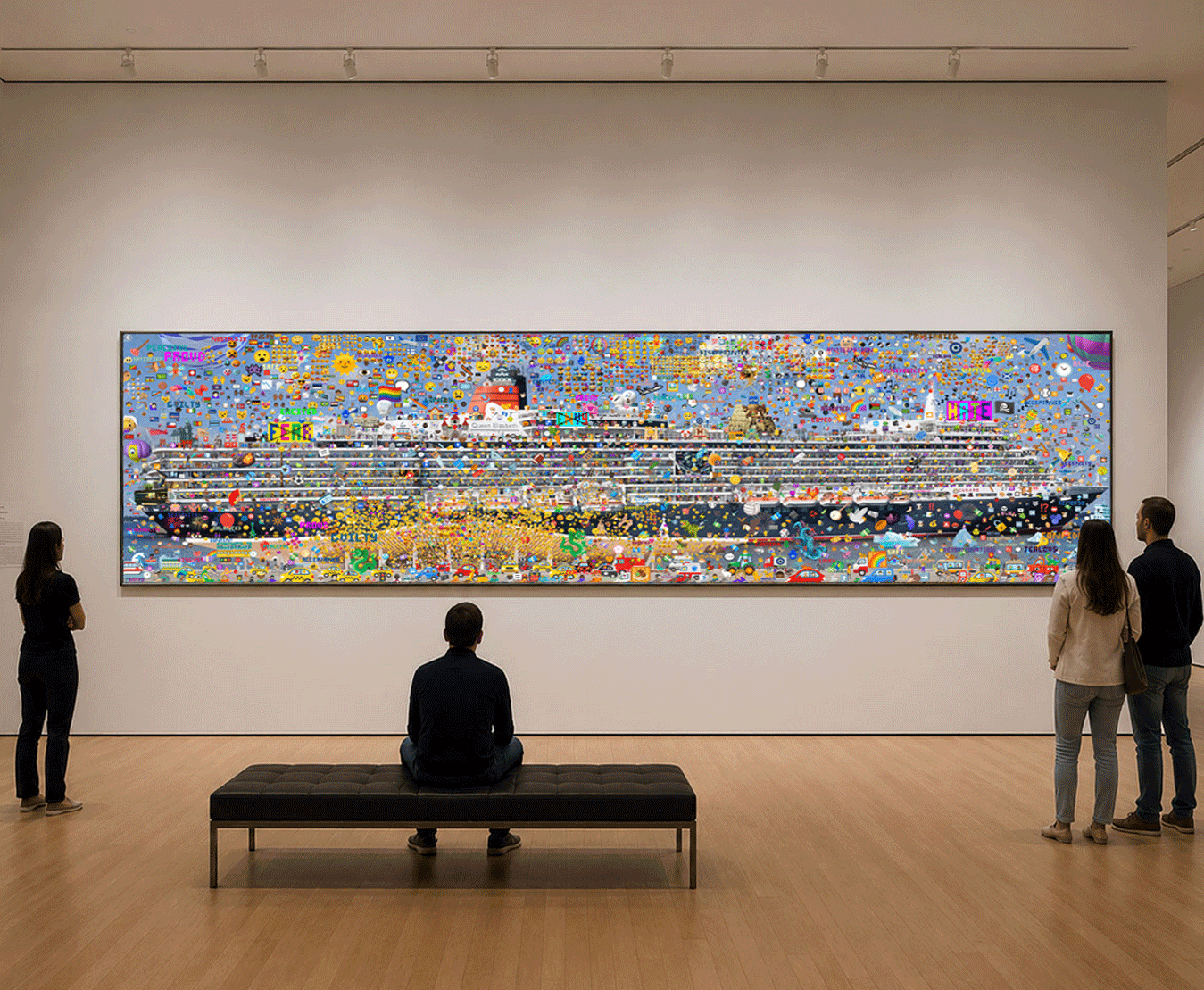
James Johnson-Perkins is a British award-winning artist whose interdisciplinary practice spans contemporary art, digital culture and social engagement through GIGATAGE panoramic montage, PLAXIS play-based structures, INTERMADE participatory events and VIDEOSTALGIA moving image works. Incorporating NASA-derived imaging, archive collections, retro media aesthetics and AI processes, his work explores memory, nostalgia, play and cultural narratives through layered visual environments and evolving forms of contemporary storytelling.
Shaped by his experiences in India, Turkey, the United States, Slovakia, Italy, Nepal, Russia, Oman, China, and the UK, his work carries a borderless sensibility attuned to the tensions and continuities of global culture. He has exhibited widely across Europe, Asia, Africa, and the Americas, including presentations at Ars Electronica in Linz and twice at the Venice Biennale. His recent inclusion in Jaipur Arts Week (2026) signals the continued expansion of his international presence.
His exhibition history spans 30 years, with recent events including Jaipur Arts Week 5, The GenAI Summit at ArtX Gallery and the Palace of Fine Arts in San Francisco, Post Digital Reality at the International Video Art Festival in Linz, and the NordArt Exhibition in Büdelsdorf. Exhibition venues include The Emily Harvey Foundation (Venice), The Royal College of Art (London), The Centre for Contemporary Arts (Glasgow), The Chinese European Art Centre (Xiamen), The Museum of Modern Art (Toyota), Czong Institute for Contemporary Art (Seoul), The Patan Museum (Kathmandu), The Museum of Digital Art (Austin), and The Art Students League (New York).
Johnson-Perkins has developed ambitious participatory projects. In Jaipur, a 400 square metre light box immersed viewers within a Gigatage work, collapsing the boundary between image and spectator. Elsewhere, he has led large-scale robot themed events in Poole and West Bromwich, UK, Nostalgia and Lego exhibitions across the world, and collaborations with international projects have included Giant Twister events in China and at the Free Arts Festival in Taiwan.
4 DISTINCT WAYS OF WORKING
GIGATAGE (Gigapan/Montage)
forms the most expansive strand: vast digital panoramas in which historical and contemporary figures converge within globally recognisable sites. Structured by themes, these works operate as immersive visual archives, referencing figures such as Canaletto, Bosch, Constable, Cage, Confucius and Schopenhauer while combining panoramic scale with intense detail.
PLAXIS (Play/Praxis)
turns to childhood materials: Games, toys, and 1980s cultural references, reframing play as a critical method through which memory and cultural meaning are examined.
INTERMADES (Interactive/Readymades)
extends into participation, using “artscores” to activate games and objects, inviting collaborative engagement and fun open-ended interpretation.
VIDEOSTALGIA (Video/Nostalgia)
combines location, performance, and retro digital aesthetics to rework culturally familiar media into layered, multi-sensory reflections on memory and time.
Together, these strands articulate a practice that is immersive and reflective, assembling fragments of culture and experience into complex systems that continually question how narratives are formed and understood.
INTERVIEWS &
SUMMARY

NEWS

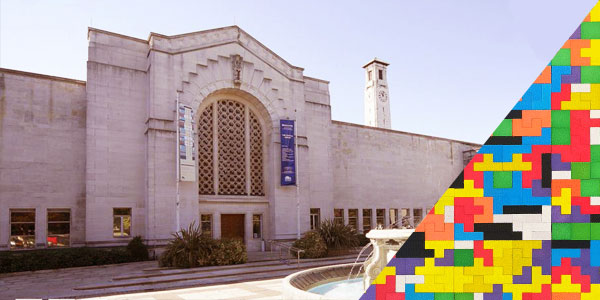
Solo Exhibition, PLAXIS PAINTINGS, Southampton City Art Gallery, Hampshire, Uk, 27th February- 26th June, 2027
Peru Bienal, Lima, 7th - 14th December, 2026
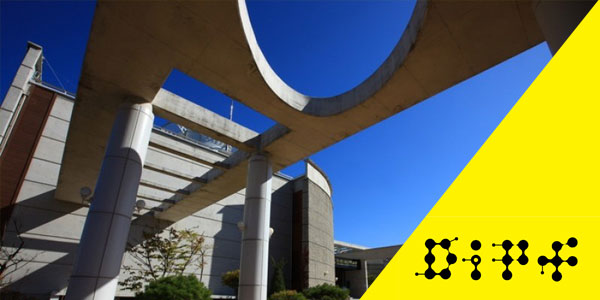
DongGang International Photo Festival , DongGang Museum of Photography, Yeongwol, Gangwon-do, South Korea, 17th July - 11th October 2026
This photographic exhibition explores landscapes as spaces that exist beyond human interpretation. The work reflects on the distance between what nature is and what we project onto it. The images invite contemplation, questioning how meaning emerges from silence, presence, and perception.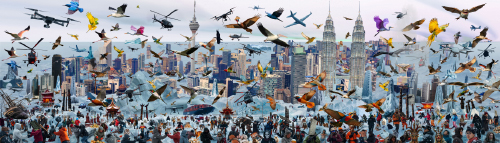
TAP AI: Extension or Extinction? Crossing Boundaries (Kuala Amprocene) eGallery, Faculty of Creative Multimedia, Multimedia University, Cyberjaya, Selangor Darul Ehsan, Malaysia, July 2026
Exploring the dynamic relationship between art, artificial intelligence, and human creativity. The exhibition invites artists to examine how AI is reshaping creative processes, challenging conventional ideas of authorship, originality, and agency. As part of the InventX Creative 2026 platform, it encourages experimentation, critical inquiry, and new ways of navigating the evolving boundaries between human and machine intelligence.
-
2027
Solo Exhibition, Artifact, New York, USA, August 2027
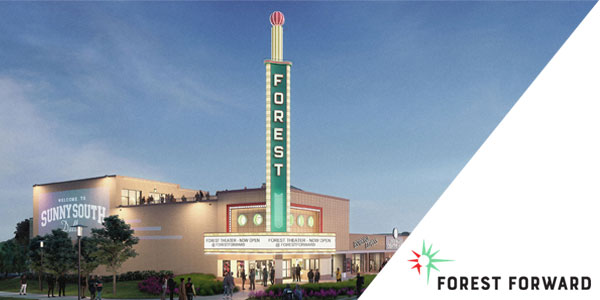
Solo Exhibition, Forest Theatre, Dallas, USA, TBC, 2027
An intimate solo exhibition of drawings and collage works exploring nostalgia held in the newly restored historic Forest Theater, a beloved South Dallas landmark whose revival reconnects community memory, cultural heritage, and contemporary reflection.