VIDEO-
STALGIA
james johnson-perkins
ABOUT
GIGATAGE
PLAXIS
INTERMADES
VIDEOSTALGIA
SHOP
BIOGRAPHY
& archive
 These Video/Nostalgia works combine important locations, performance, and retro digital aesthetics to rework culturally familiar media into layered, multi-sensory reflections on memory and time.
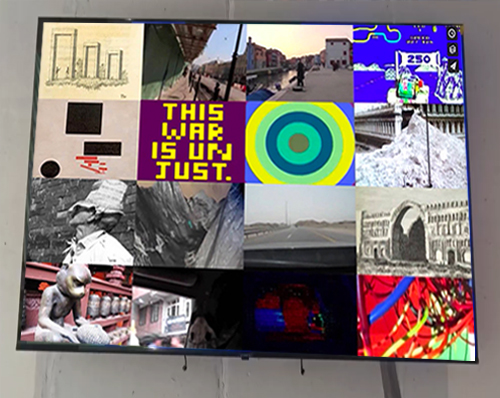
Beijing International Design Week, Zhang Jiawan Design Center. TongZhou, Beijing, China, 2023
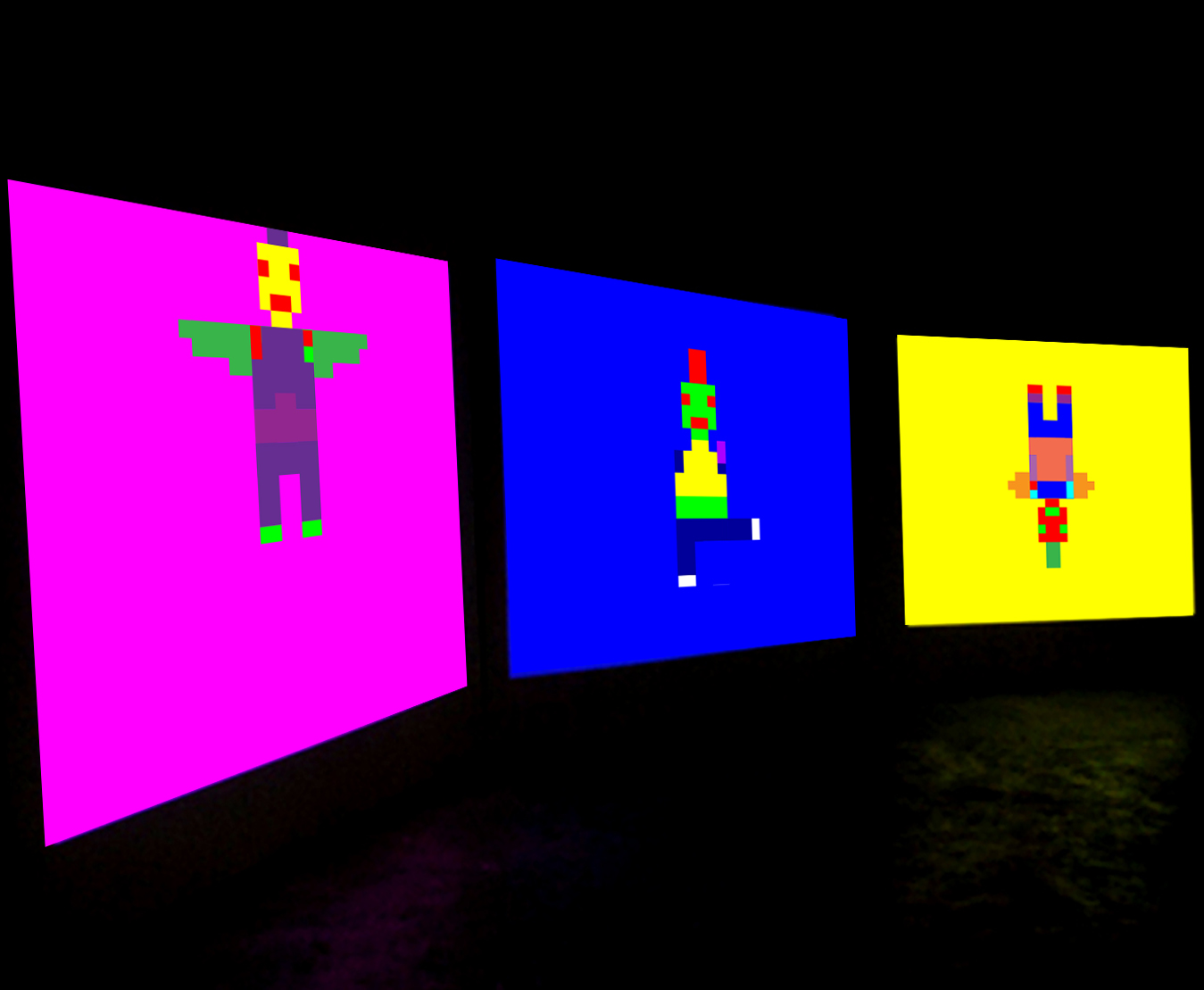
TITLE IMAGE (TOP): Video Installation, nospace, Bangkok, Thailand, 2010
VIDEO/
NOSTALGIA
VIDEOSTALGIA works combine significant and emotionally resonant locations, including Venice, New York, Moscow, Kathmandu, and Muscat, with performance to camera, nostalgic soundtracks, and reframed, culturally familiar media. In this configuration, the staging of identity and place where the camera operates as a site of performance, mediation, and self-reflexive encounter. These works include reinterpretations of 1980s songs such as I Want to Break Free by Queen, alongside transformed episodes of The A-Team and Knight Rider, rendered through ASCII code and ZX Spectrum graphics. Through these processes, the works seek to capture the essence of particular times and places while interrogating the emotional charge they carry.
By combining film, music, and performance, Johnson Perkins constructs a multisensory framework that both immerses the viewer and prompts critical reflection on personal and collective memory. This interplay resonates with the durational and affective strategies of Bill Viola, while also aligning with David Blandy, whose engagement with popular culture and gaming situates identity as a construct shaped through shared media histories. The use of translation, technological mediation, and retro digital aesthetics further echoes the work of Cory Arcangel, where obsolete systems are reactivated as both medium and subject. The works do not simply reproduce nostalgia; rather, they reconfigure it as an active and unstable process, foregrounding the ways in which memory is mediated, edited, and continually reconstructed through audiovisual forms.
Situated within a broader field of contemporary video and film practice, the VIDEOSTALGIA works engage with current tendencies that blur distinctions between archive and remix, analogue and digital, and documentation and performance. The use of appropriation, degraded image systems, and culturally embedded media reflects a wider turn in moving image practice toward examining the material conditions and histories of media itself. The work also echoes vidoes by Gillian Wearing and Phil Collins through its performative use of the camera, while its engagement with retro technologies and remix culture situates it within practices that interrogate the afterlives of digital forms. Across these intersections, nostalgia is repositioned not as passive reflection but as a critical and generative mode of enquiry, continually performed and reimagined through the evolving languages of contemporary video and film.
VIDEOSTALGIA
SELECTED VIDEOSTALGIA WORKS
Don't Ningbo, 2025
Videostalgia
Geordie Famous, 2024
Videostalgia
Red Free, 2022
Videostalgia
Need Square, 2021
Videostalgia
Shoot Venice, 2019
Videostalgia
Nepal Love, 2016
Videostalgia